Previous Academic Research
Gravitational-Wave Data Analytics
My research experience began as an undergraduate physics and math student studying at Montana State University. With aspirations of becoming a theoretical physicist my work was not directed towards new discovery, but focused on learning about hydro-static equilibrium of stellar objects. My early projects gave me a passion for taking analytic problems and using numerical tools to model their solutions. I entered my graduate studies at an exciting time, the Laser Interferometer Gravitational-Wave Observatory (LIGO) Scientific Collaboration released it’s first findings of merging black holes, and this was a catalyst for joining Dr. Sukanta Bose’s group at Washington State University.
The work I was doing at WSU aimed to address two questions in the growing field of Gravitational-Wave detection: how can we gain efficiency in the speed of performing an all-sky search for coalescing compact binary Gravitational-Wave emission? And how can multiple detector networks be used to statistically differentiate between loud noise glitches and Gravitational-Wave signal? My past research has attempted to answer both of these questions through numerical modeling and statistical analysis of simulated LIGO data. While these questions have some overlap, they also carry their own unique research challenges. An overview of the details involved in my research are given in my curriculum vita, but I would like to highlight my contributions that led to successful insights into these studies in order to showcase my ability as a researcher.
Convex-hull optimization for faster all-sky multi-detector coherent searches of gravitational wave signals from compact binary coalescences
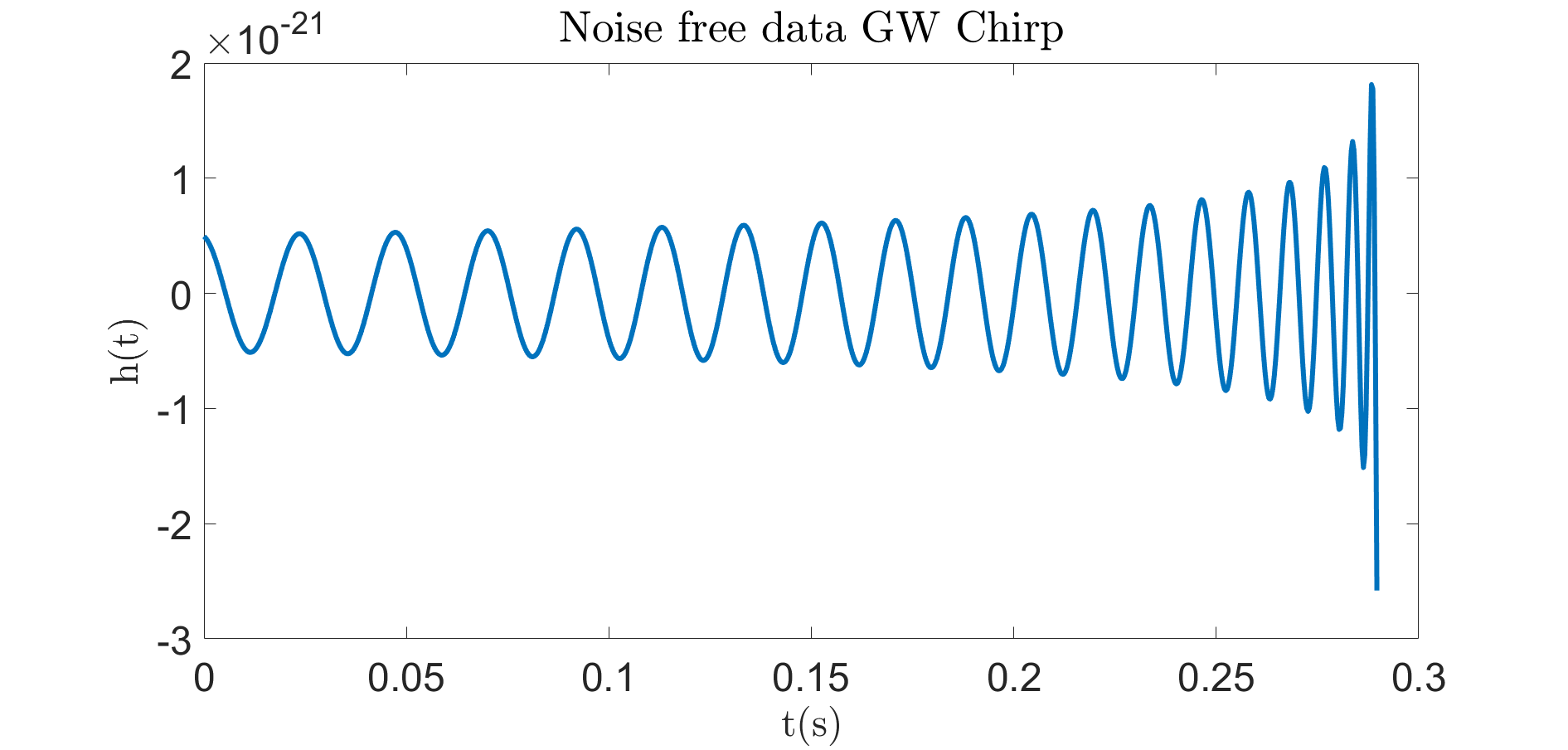
In regards to performing all-sky searches in a more efficient manner, my work focused on using a convex hull optimization to cut down on compute operations required to maximize the compact binary coalescence search statistic. It is well known that the parameters that make up these signals are numerous, from mass and spin parameters to sky location angles describing the wave in a given reference frame. My work focused on singling out the sky location angles, which also effect time delay between arrival at separate detectors, and bounding the search statistic by a convex function. This allows an all-sky search to effectively become a search over the convex set of detector data in the time delay parameter. My work using the convex hull allowed for algorithmic efficiencies in performing an all-sky search. This allowed for less compute operations needed to maximize the search statistic by a factor greater than or equal to seven, when compared to previously used methods. As a non LIGO Scientific Collaboration member my efforts were carried out by simulating Gravitational-Wave signals for compact coalescence binaries numerically, then performing comparison tests between previous search methods and my convex hull search method.
A multi-detector null-stream-based Chi-Squared statistic for compact binary coalescence searches
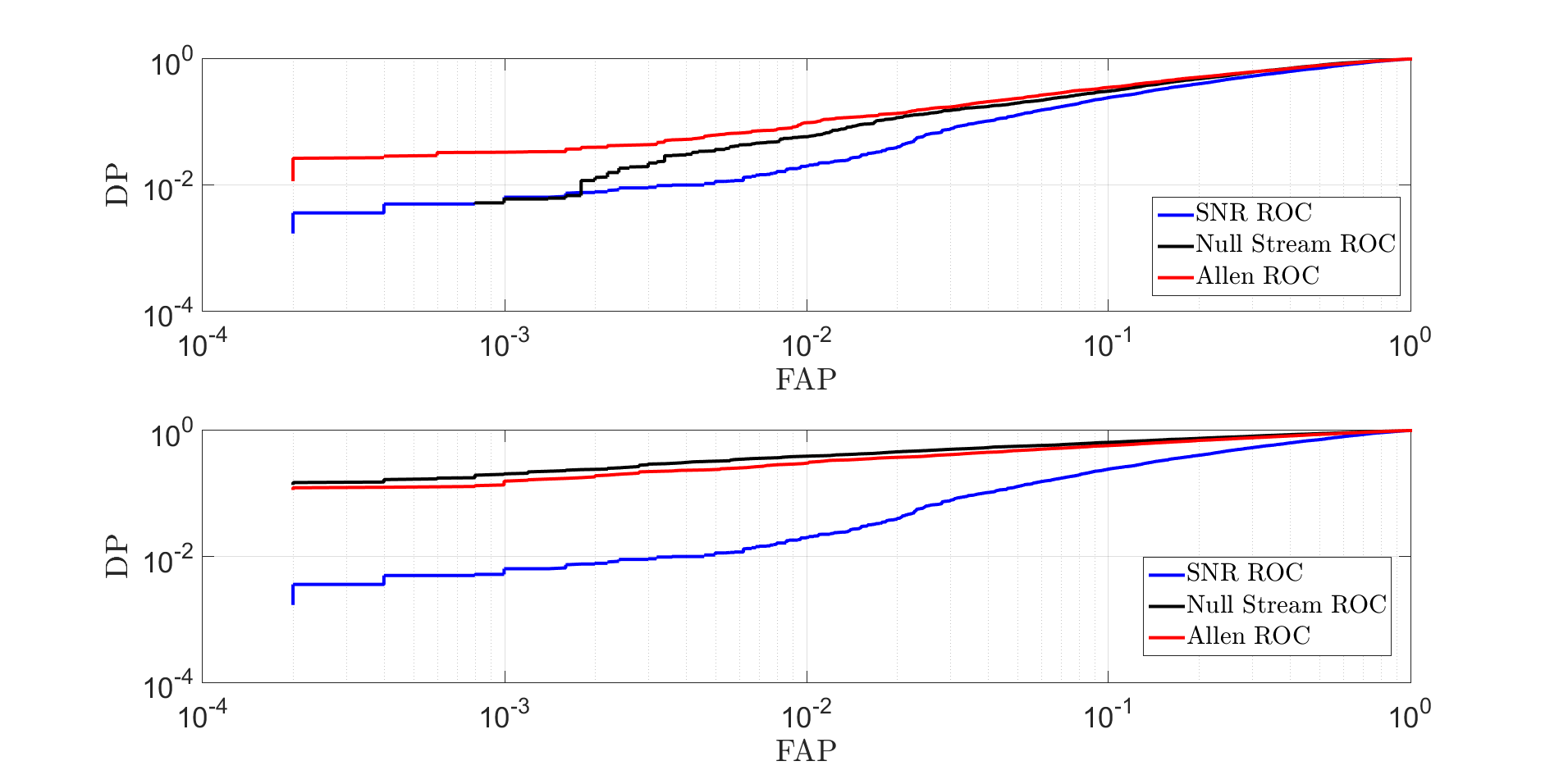
My research in distinguishing noise glitches from Gravitational-Wave signal involved simulating signals for compact coalescing binaries, as well as detector data and noise transient glitches. In this project I focused on statistical analysis involving Chi-Squared distributions. This problem required me to sharpen my knowledge on noise, specifically how the noise in LIGO detectors is modeled. The current models assume that the noise in a given LIGO detector is normally distributed Gaussian noise, but in reality there can exist non-Gaussian transients. These transients in the data are some times referred to as glitches. The Gravitational-Wave field then makes use of the assumed random Gaussian properties, and how they effect Chi-Squared distributions in matched filtering compact coalescing binary detection statistics, to distinguish the glitches from Gravitational-Wave signal. It was then my goal to meld two existing discriminator tests together, one that allowed a tuning of the degrees of freedom in the search statistic from a Chi-Squared test, as well as a null stream construction discriminator. The former allows the ability to increase the distinction between unwanted noise glitches and Gravitational-Wave signal by performing matched filtering over smaller bands in a given detector, increasing the degrees of freedom in a Chi-Squared distributed statistic. The latter carries strength in using multiple detectors to manipulate data, canceling Gravitational-Wave contribution.
I was then able to use an existing framework from both ideas to successfully create a network wide statistic from null stream construction that has a tunable degree of freedom. This statistic is then Chi-Squared distributed, and combines the strengths of previous well known discrimination tests. My results showed this statistic was successful in distinguishing between Gravitational-Wave signal and noise glitches. In my simulated data trials it performed well when compared to established methods for a three detector network. My new method returns comparable, if not somewhat better results, to that of previous network Chi-Squared tests. For sine-Gaussian glitches present in the least sensitive detector, having a signal to noise ratio below 15, our null stream Chi-Squared test outperforms these older methods by having a Chi-Squared value of 1.5 higher then traditional methods. This work has been accepted by Classical and Quantum gravity, sited under https://doi.org/10.1088/1361-6382/ab30cf.
Outreach and Presentations
My position at WSU gave me experience as a Teaching Assistant (TA) that oversees undergraduate labs. This has helped my research abilities by practicing giving information in a clear and concise way. I am more interested in focusing on my research than teaching in my future career path, but the public speaking skills gained from being a TA have benefited my ability as a presenter. I have experience presenting from my undergraduate research when I was involved with the Ronald E. McNair scholars, as well as recently with giving a talk on my convex hull optimization work at the American Physical Society (APS) Northwest meeting in 2017. Continuing to practice as a presenter and public speaker will remain a part of my professional development I wish to prioritize.
Outreach and volunteer work is also an aspect of my professional development I wish to focus on. It was a physics outreach experience that got me interested in physics as a youth. I also volunteer with 4H, working with youth to instill leadership skills. These two aspects are both important to me to develop my professional skills. My outreach goals are focused on developing an interest for science and math in young, under represented minorities.
 William Dupree, Ph.D.